The house sleeps thirty-two, and some sixty people from eight branches of the family take turns staying there. They used to organize it in a Google Sheet that had piled up duplicates and rows with no dates, and that couldn't answer the one question that matters before you pick your dates: how many beds are already taken that night.
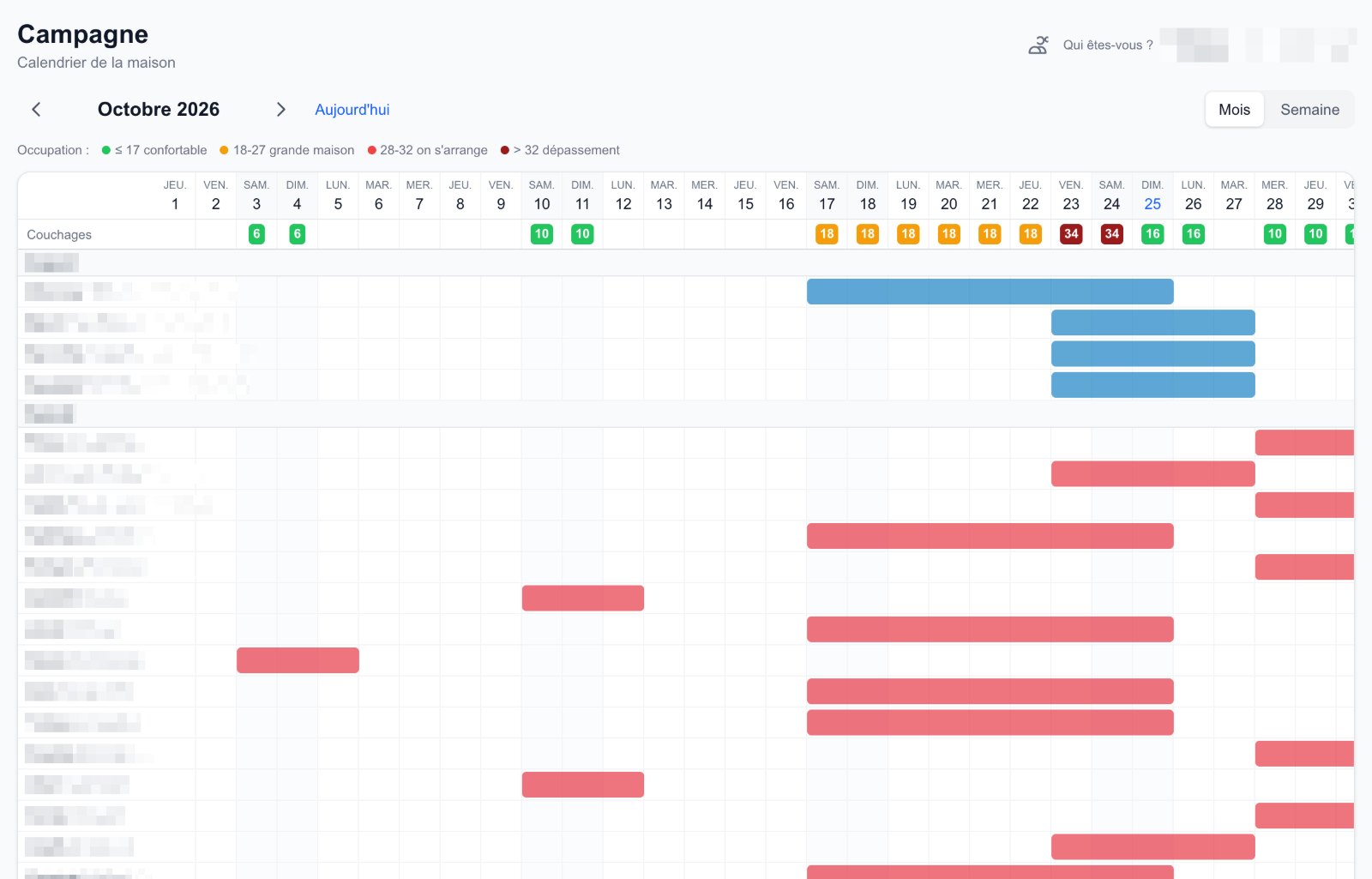
Everyone enters their dates from their phone, with no account and no password: identity is a simple preference kept on the device. When a night overflows, the app shows it, and the family sorts it out. The spec puts it in one sentence: the negotiation happens within the family, outside the app.
Seventeen minutes, then rules
The spec was written on April 10 at 4:40 p.m. At 4:57 p.m., Claude Code delivered a complete first version: month and week views, entering stays, colored thresholds at 17, 27 and 32 beds. Member management came the next day.
To fill out the starting data, Claude had added family members who don't exist. The fix that removes them was written at 5:53 p.m. At 9:44 p.m., the project got its instructions file for Claude, with this section.
- Never make up data: stick to the spec
- If information is missing, ask instead of improvising
- Don't contradict what the user sees in their UI
- Think before acting, not the other way around
- Don't add features nobody asked for
What came next
On May 8, a Claude session explored what came next on a working branch, in 24 commits: a day view, counters per family branch, a date picker like the ones for booking flights, and the room assignment page the spec had planned for a second phase, with an alert when a room is overbooked.