After our building changed property managers, the owners' council (a handful of volunteer co-owners, me among them) had to put a figure on a claim against the former manager. What we had was the general ledger the former manager had kept, and the new manager's document portal, with more than a thousand documents. The ledger could be used to compare results, not to establish them. The accounts had to be rebuilt from the documents, in a way that let any co-owner follow a figure back to them.
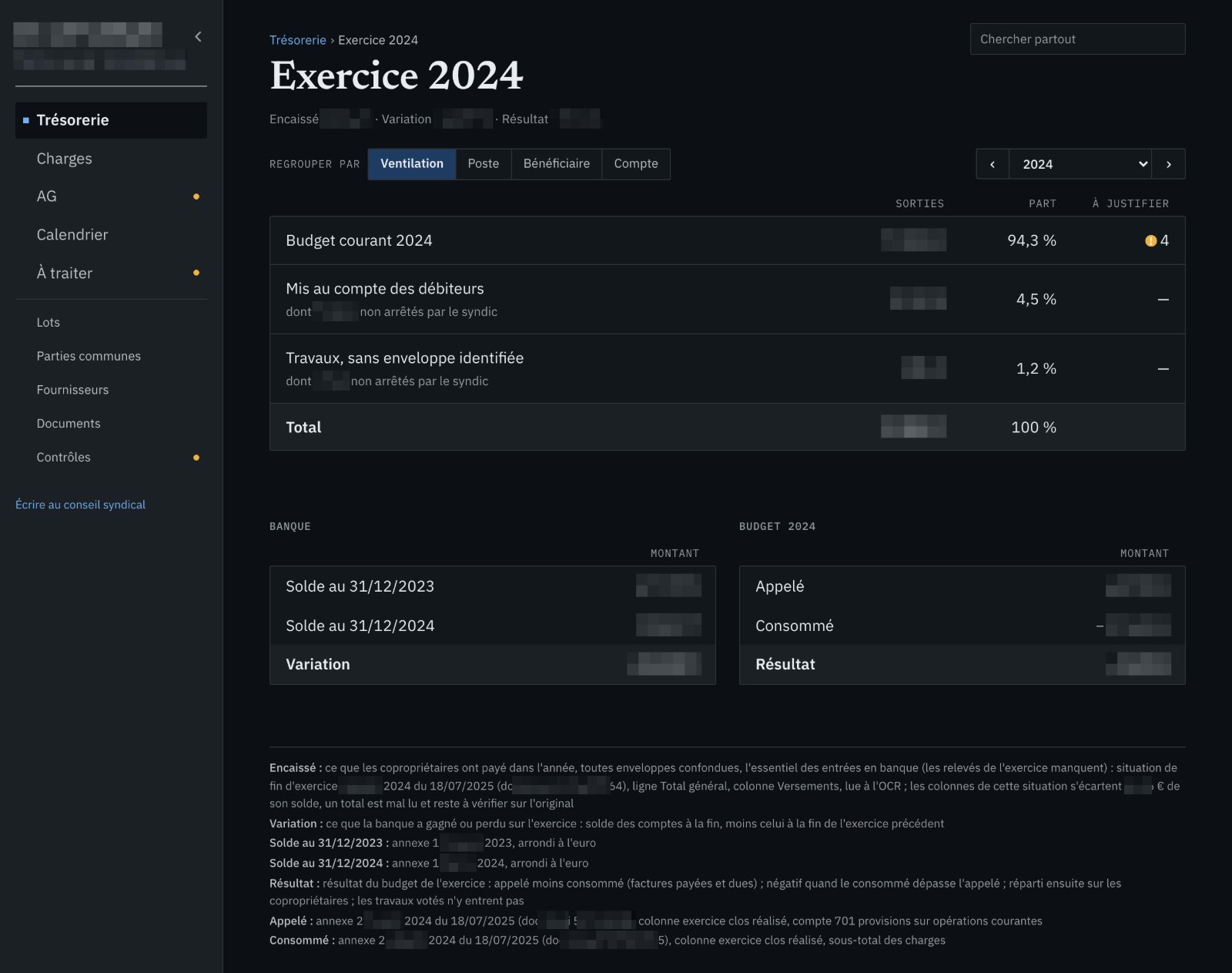
One rule for every figure
On October 3, a commit set the method for every rebuilt figure. Input values go into a CSV, one row per value, with the document, page and account they come from. The calculation lives in a commented function. A script run by hand caches the result along with its intermediate values, and the site reads only that cache: it recalculates nothing. A check redoes the calculation and flags a stale cache, with the command to rerun. A value the tool had to infer for lack of a document is labeled "not signed off by the property manager," and every decision of that kind is recorded in a log.
The checks are 59 rules, rerun on every deployment and every hour: duplicate documents, documents from another building, matching, allocation of charges between units, double entry, freshness of the caches. When one fails, a banner says so on the home page. The double-entry books themselves are rebuilt document by document, without taking anything from the property manager's ledger.
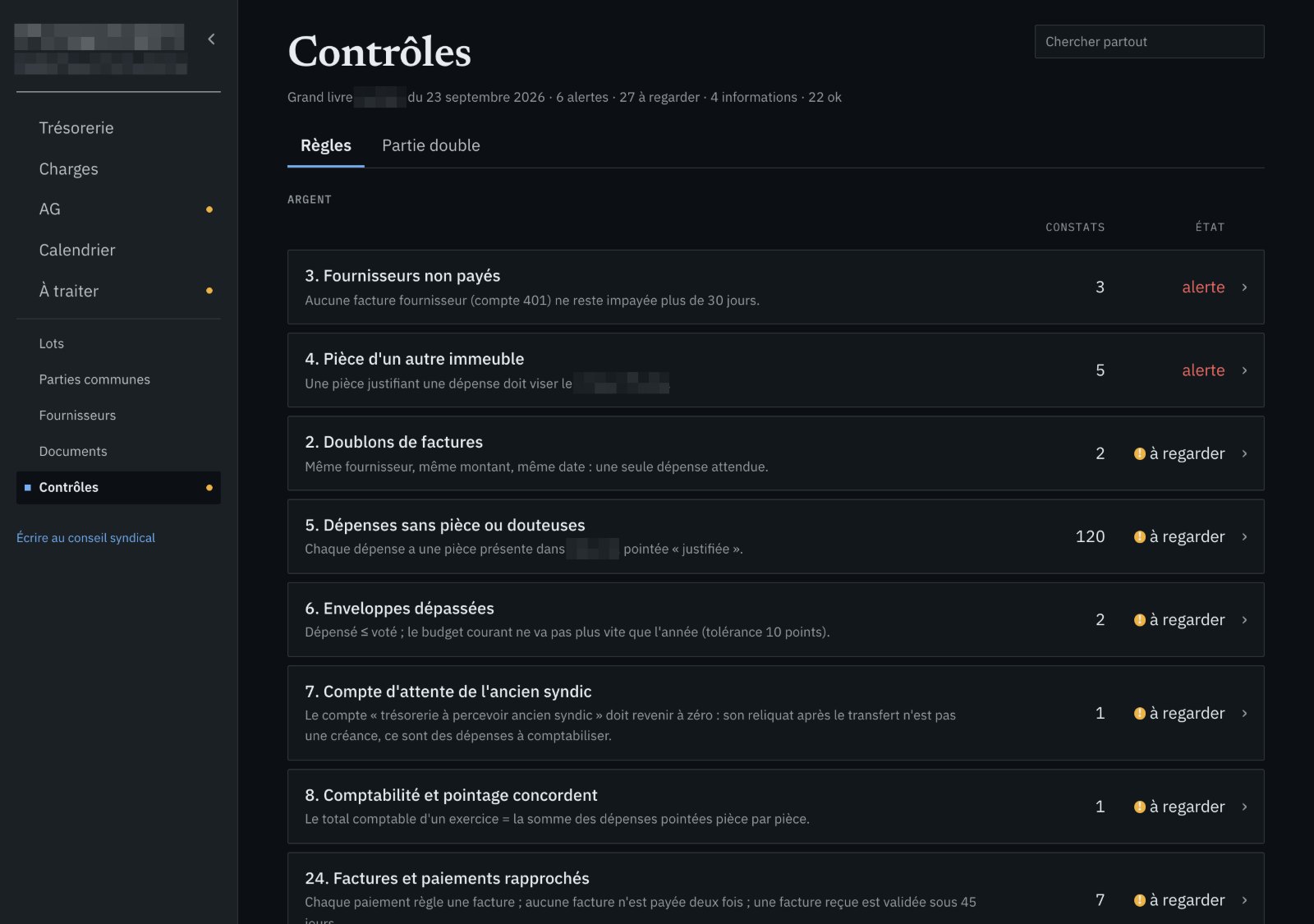
A fact goes in a note, an action in an issue
The rest of the work is filed by a single rule. What we know goes into a note in the knowledge base. What needs doing becomes a GitHub issue, filed under a goal and a problem, with a criterion that says when it is done.
- Channel
- letter
- Done when
- the notices are received and filed
- Status
- waiting on the manager
As of October 24, the repository held 91 issues, 80 of them open. A single issue can serve several goals.
Document by document
On the first day, the property manager's 1,520 documents were logged with their metadata and text, using OCR where needed, then each year's expenses were matched to their documents. Each square below is an expense line; the empty squares never got a supporting document.
2025 and 2026 have been matched too.
On October 7, at the end of a 58-commit day, the reconciliation established that the water charges the former manager had allocated among the units added up to the water utility's invoices, for 2017 through 2025.
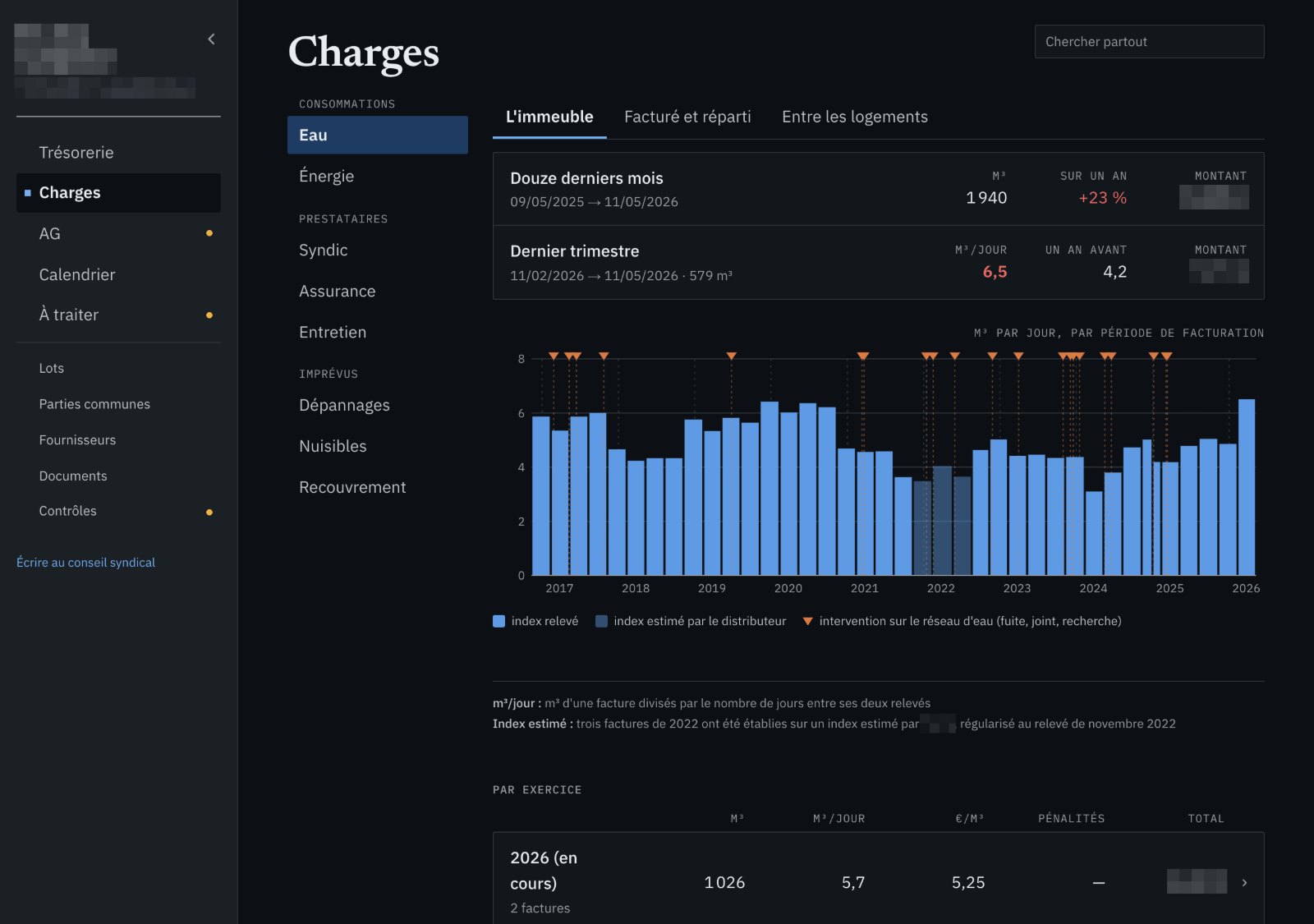
The site stays private, behind a password. A selection of files, filtered through an allowlist and a script that blocks the export of banned terms, email addresses and phone numbers, was shared with the other co-owners on October 20.