Synaxe publishes Dune, software for operators of quarries, concrete plants and asphalt plants. It was sold as a layer over sensors on the trucks: knowing what the truck carries and where it is. The operators I interviewed talked about something else. They move materials, waste among them, under obligations that keep piling up, and their difficulty was not measuring what they do but proving it afterwards. A site that cannot file its declarations can no longer receive anything. Compliance has a budget line at the customer's; better figures do not.

As sold
As repositioned
Product
A layer over sensors on the trucks.
A management and compliance tool for the sites.
Problem
Technical: the data is not captured.
Regulatory: the data exists and cannot become evidence.
Value
Better figures.
A correct invoice and a defensible file when the inspector arrives.

Five roles, one purchase order passing between them
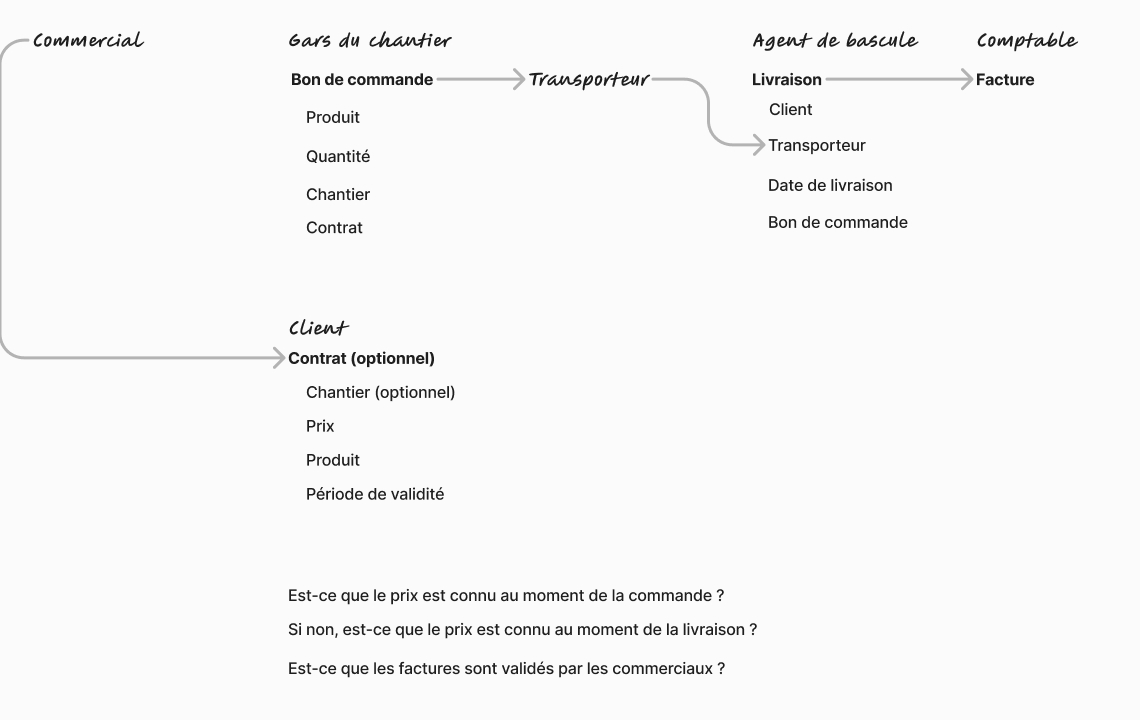
The five roles handwritten on the board: salesperson, site worker, haulier, weighbridge operator, accountant, and what each one holds, from contract to invoice
The first research board, as it was. The salesperson holds the contract, the site worker the purchase order, the weighbridge operator the delivery, the accountant the invoice. And the questions that decided the model.
  • Is the price known at the time of the order? If not, at the time of delivery?
  • Are invoices validated by the sales team?

These two questions separated the contract from the order. The contract is a customer's price list over a period; the order is what has to be delivered. The price may not be known until the invoice.

The model
Customer→Contract→Delivery call-off→Trip, weighings→Delivery→Invoice
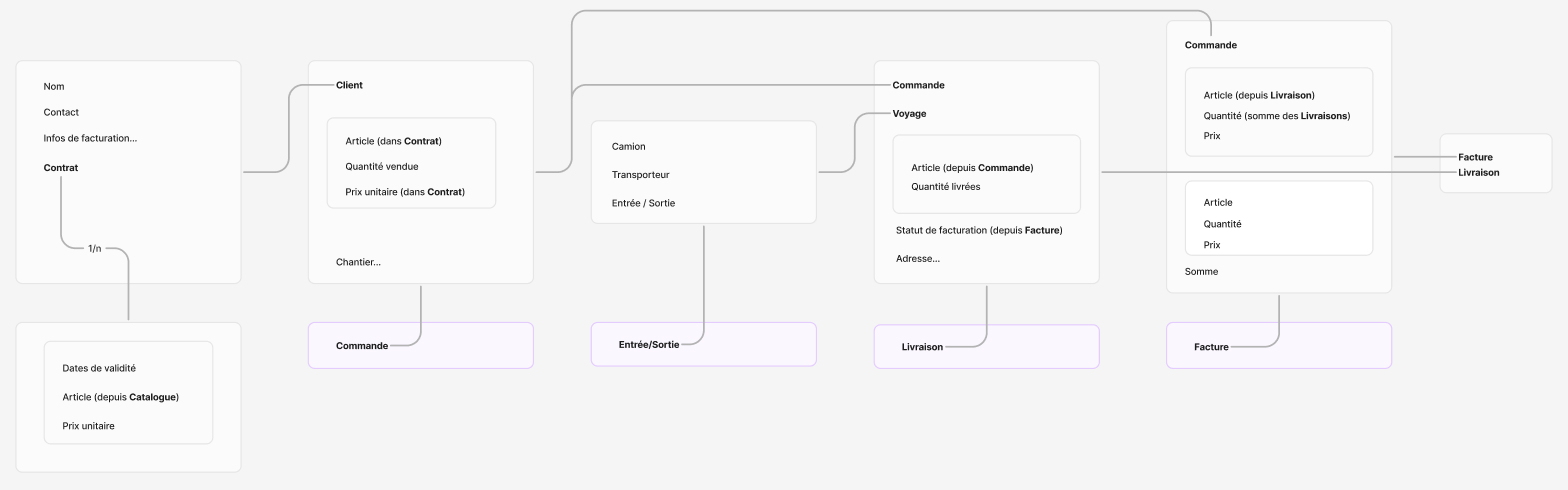
The invoicing data model: customer, contract with its dates and unit prices, order, entry and exit with truck and haulier, delivery with quantities delivered, invoice summing the deliveries
The model, as it is in the file. The contract carries the prices, the order the quantities, the trip the weighings, and the invoice sums the deliveries.
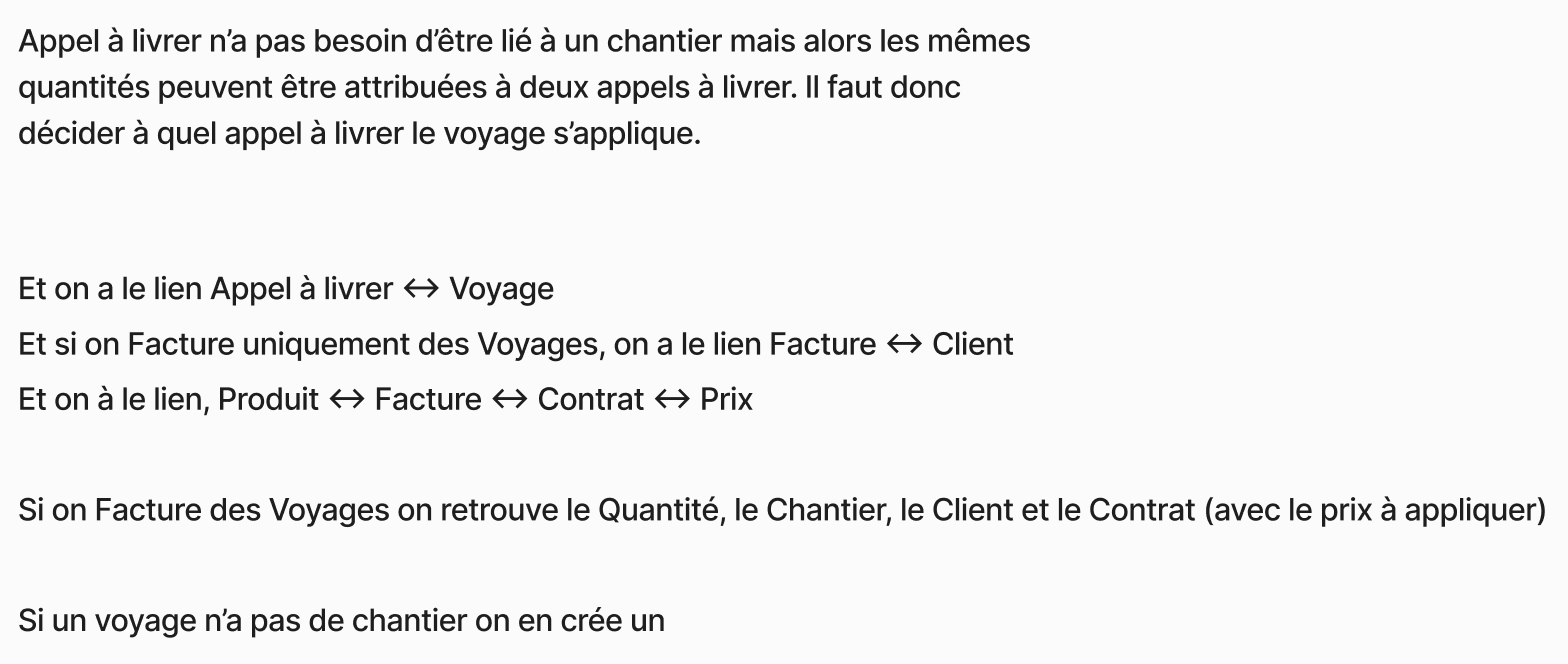
The reasoning notes: a delivery call-off does not need to be linked to a site, if we invoice trips we recover the quantity, the site, the customer and the contract with the price to apply
The reasoning that closes the model: if we invoice trips, every invoice recovers the quantity, the site, the customer and the contract, hence the price. A trip without a site creates one.

The price of haulage, the largest share of the cost of aggregates, depends on the day, the distance, access to the site and the number of round trips the truck makes. Impossible to calculate correctly. The answer we settled on, in the file's comments with the developer: a field filled in at the order, editable at the invoice, and the calculation left to the sales team.

The screens, in the order of the chain

The setup steps: creating a customer, a site, a contract, the delivery call-offs, then tracking by trip, the weighings, the trucks, the haulier, then invoicing the trips
The steps, in the order a site goes through them.
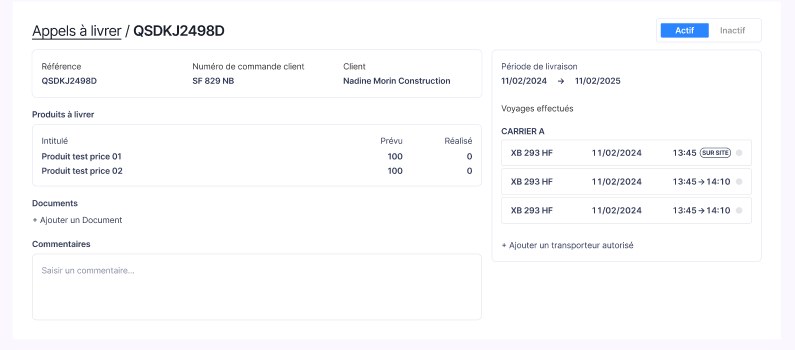
A delivery call-off: reference, customer order number, customer, products to deliver with planned and actual, delivery period, trips made by haulier
The delivery call-off, what remains to be delivered on an order, and the trips already made.
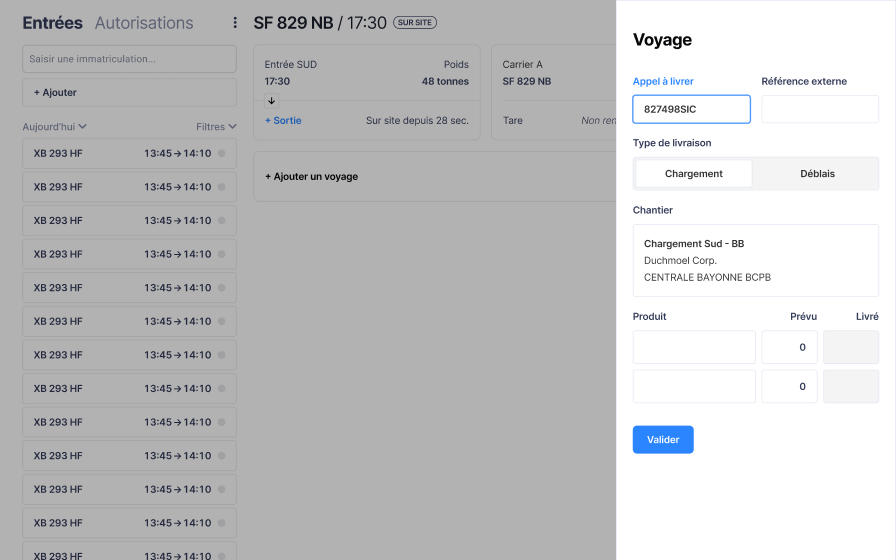
A truck on site and the trip creation panel: delivery call-off, delivery type, site, products with planned and delivered quantities
The truck is on site, weighed on entry. The trip is attached to a delivery call-off.
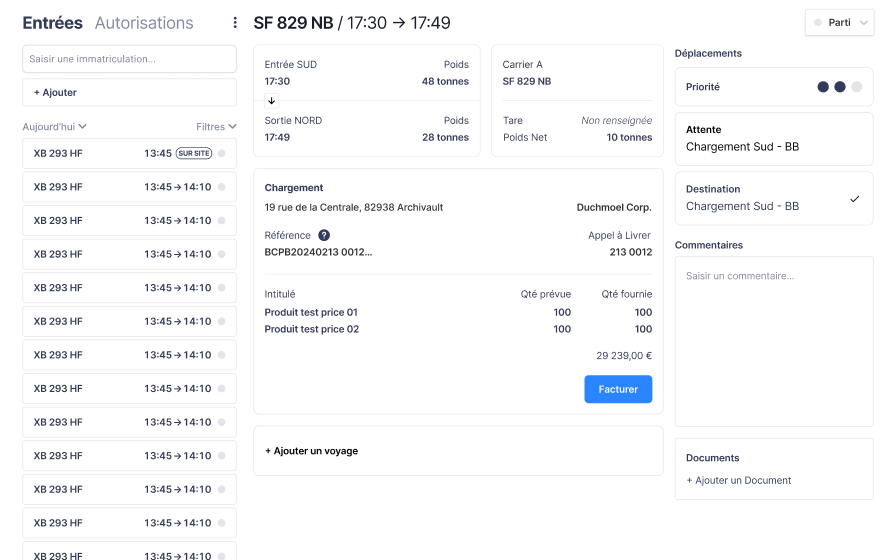
The screen of an entry to be invoiced: south entry at 17:30 with 48 tonnes, north exit at 17:49 with 28 tonnes, net weight 10 tonnes, loading, products and an Invoice button
The truck has left. The net weight comes from the two weighings, and the Invoice button closes the chain.
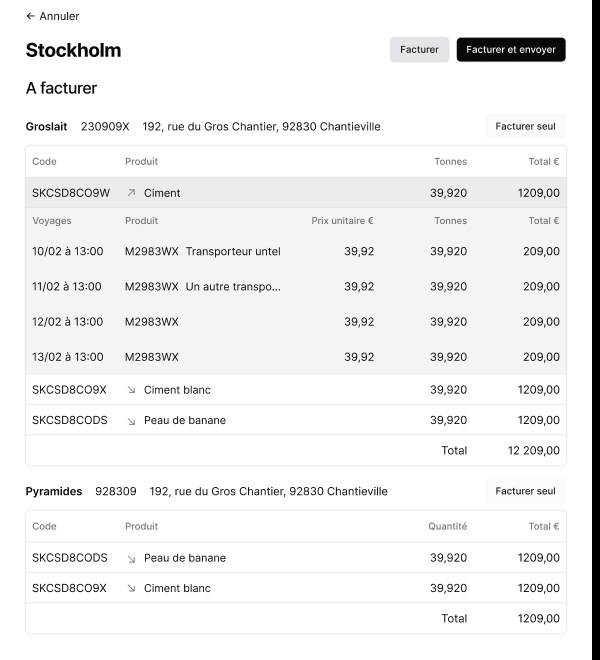
A customer's invoice, by site: each product with its trips unfolded, the unit price, the tonnes and the total
A customer's invoice, by site. Each product line unfolds into its trips.

All the data in these screens is test data.

Waste compliance

The second tool tracks the waste entering a site: the prior acceptance declaration, with the producer, the haulier, the origin and the destination, and the two ways of signing it, by hand or electronically. The file contains the captured government online service, the form rebuilt field by field and the signature circuit. I am not showing these screens: they reproduce an administrative form.

What came of it

Both tools are in production at customers, including groups in the sector, and have brought in new contracts and renewals. The repositioning was the founders' decision, which I argued for from the interviews. What counted was less the presentation of the repositioning than the two tools that were running at the end.