The vendor sells compliance software to pharmaceutical laboratories. The product has to cover obligations that are not negotiable, each with its deadline, its format and its reference text. The team, meanwhile, was moving forward without an experienced designer, and with a product owner who did not know the product well as marketing sold it. I was asked for an audit of the interface.
Six workflows, line by line
I started by reconstructing what the software has to make people do, obligation by obligation, in five columns.
- Pre-authorisationA planned benefit must be approved before the event, from the requester to compliance and then to the professional body. Decree 2020-730.
- Electronic signatureThe agreement, once authorised, is signed through a qualified, timestamped process. eIDAS Regulation.
- Expense recordingEach cost line, entered during or just after the event, checked against thresholds and ceilings. Decree 2020-730 and the typology order.
- Transparence-Santé declarationTwice a year, before 1 March and 1 September, an XML export conforming to the portal's schema. Bertrand law and decrees.
- EFPIA disclosureOnce a year, before 30 June, the year's transfers of value aggregated and published. EFPIA Code.
- Log and retentionEvery action logged, kept for five years, purged when due. GDPR and Sapin II.
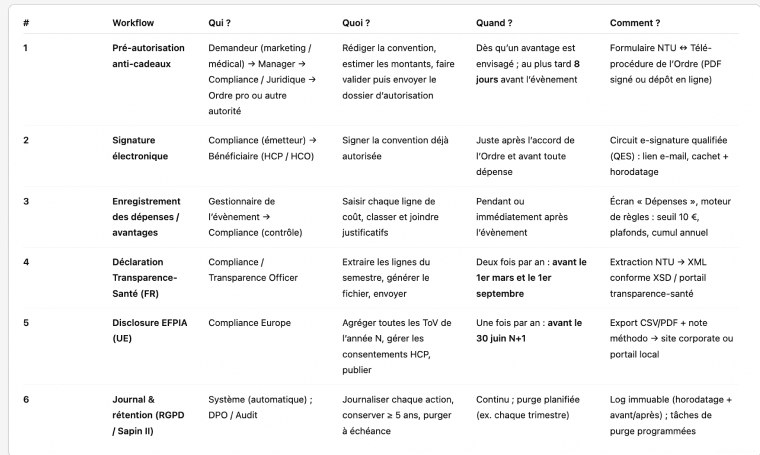
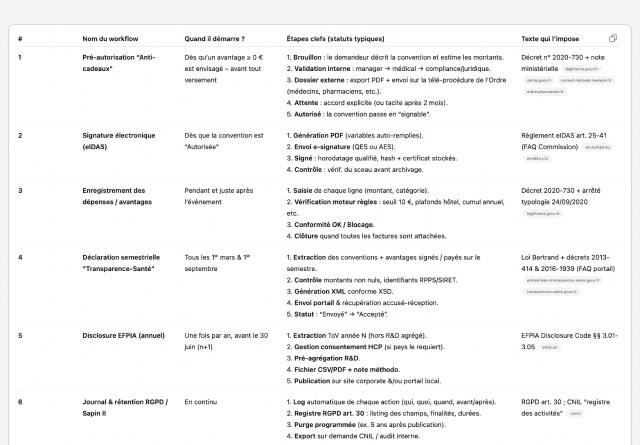
These two tables are the deliverable the team did not have. Before them, nobody could say of a screen whether it served an obligation or was there out of habit.
The application, set against it
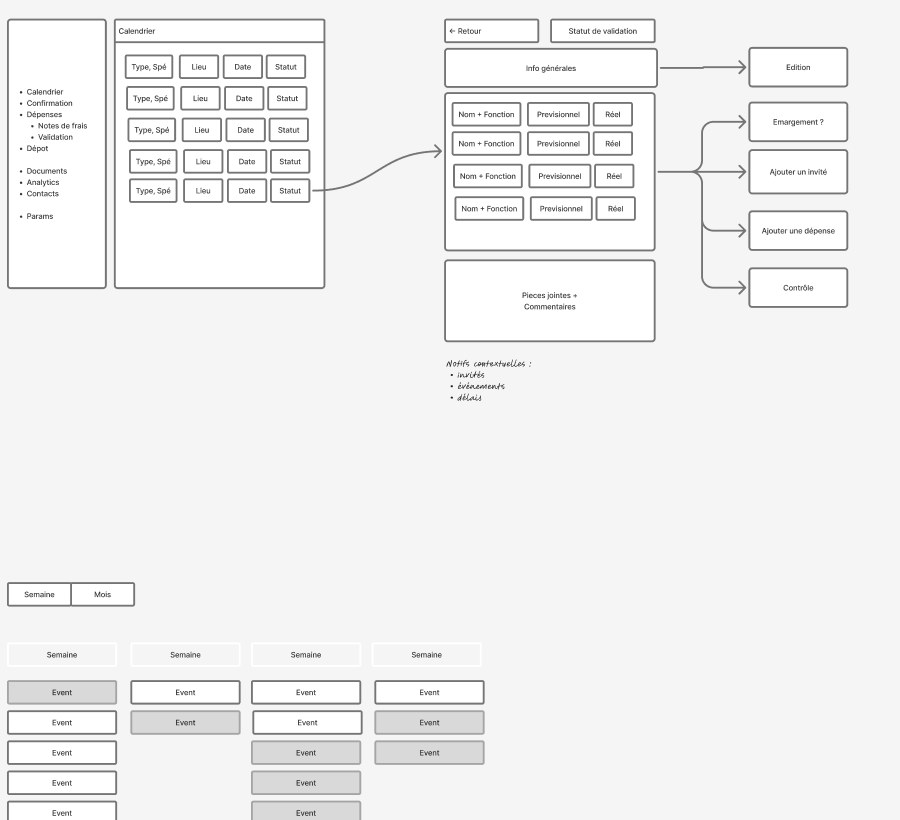
Once the obligations were on one side and the screens on the other, the diagnosis almost wrote itself. The problem was not the interface. It was that nobody on the team held the map of obligations the product being sold was supposed to cover, and that the product was being built feature by feature, on request.
The migration, as an equation
A migration is acquisition.
A migration is also mental load, conceptual debt, and more than sixty per cent of the costs.
The vendor was migrating its customers to a new version. The two sentences on the board say what the team had not set down: the migration is the moment a customer can leave, so it is handled as a sale, and it costs the team more than everything else for as long as it lasts.
What we do not know
What the client did with the diagnosis. The audit was followed by two days of product support, and I have no measure beyond that. The team diagnosis, which is part of the report, stays between the client and me.