A marble slab is a unique piece: two slabs from the same block do not have the same veining, and a buyer travels to the yard to choose theirs. Mineral Expertise, which sells high-end marble to architects, hotels and yacht builders, offered me to co-found a marketplace for these slabs. I knew nothing of the stone trade, its channels or its buyers.

The thesis, in four equations

Before drawing anything, I wrote down what the project assumed, as a chain of equivalences. It can be said aloud in four sentences, and it explains why the first product to build was not the marketplace.

  • a scan=a slab online
  • slabs online=an inventory online
  • an inventory and prices=a catalogue
  • catalogues=a marketplace
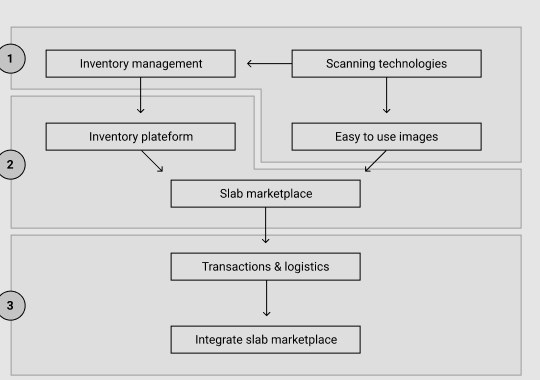
The three-step plan from the board: inventory management and scanning, an inventory platform and easy images leading to a marketplace, then transactions, logistics and integration
The three-step plan, as it stands on the board: inventory first, the marketplace next, transactions and logistics last.
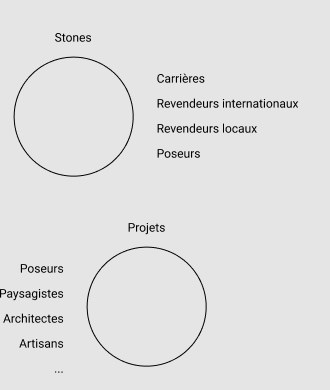
The two sides of the market: on the stone side, quarries, international dealers, local dealers, fitters; on the project side, fitters, landscape designers, architects, craftsmen
The two sides. Fitters are on both.
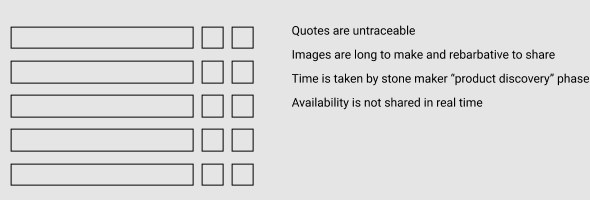
The frictions noted: untraceable quotes, images slow to produce and painful to share, time lost in the discovery phase, availability never shared in real time
The four frictions observed in the field.
1. InventoryA stock tool plugged into the scanners, useful to a seller before the first buyer arrives.
2. The marketplaceThe inventories brought together, with images that are easy to produce and share.
3. TransactionsPayment, logistics, integration on the sellers' side.

The first six months were fieldwork: yard visits, price lists, trade press, and an order-tracking board built for a factory in Lyon, machine by machine. The field confirmed the problem: around a single slab, the scanner, WhatsApp, the production spreadsheets and the PDF quotes each held part of the information, and none passed it on to the others.

The POC
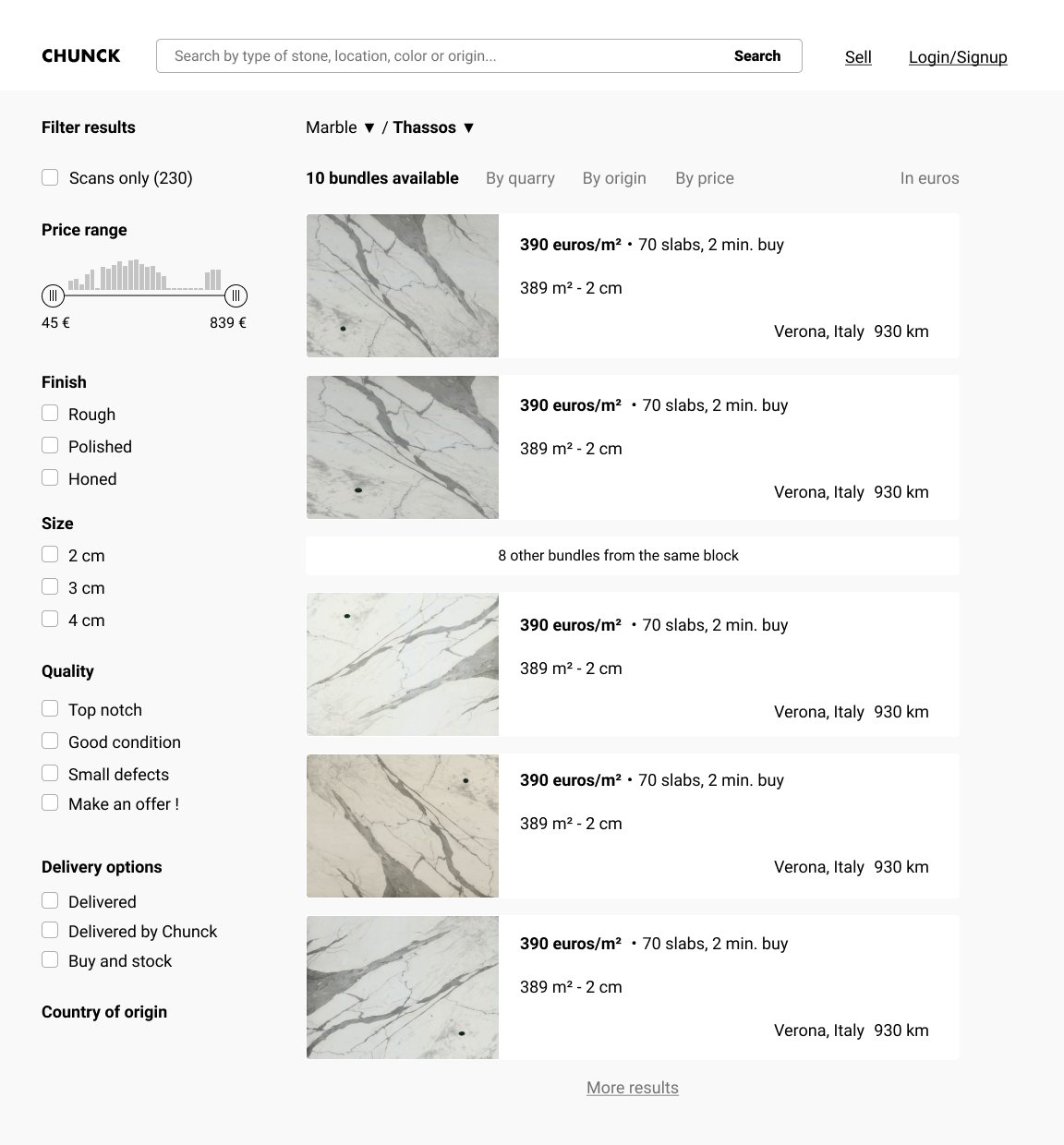
Chunk search results, by lot: price per square metre, number of slabs, minimum order and storage city
Search, on the buyer's side. Results by lot, with the price per square metre, the minimum order and the storage location. An option groups the same stone sold under several names. Fictional sellers.
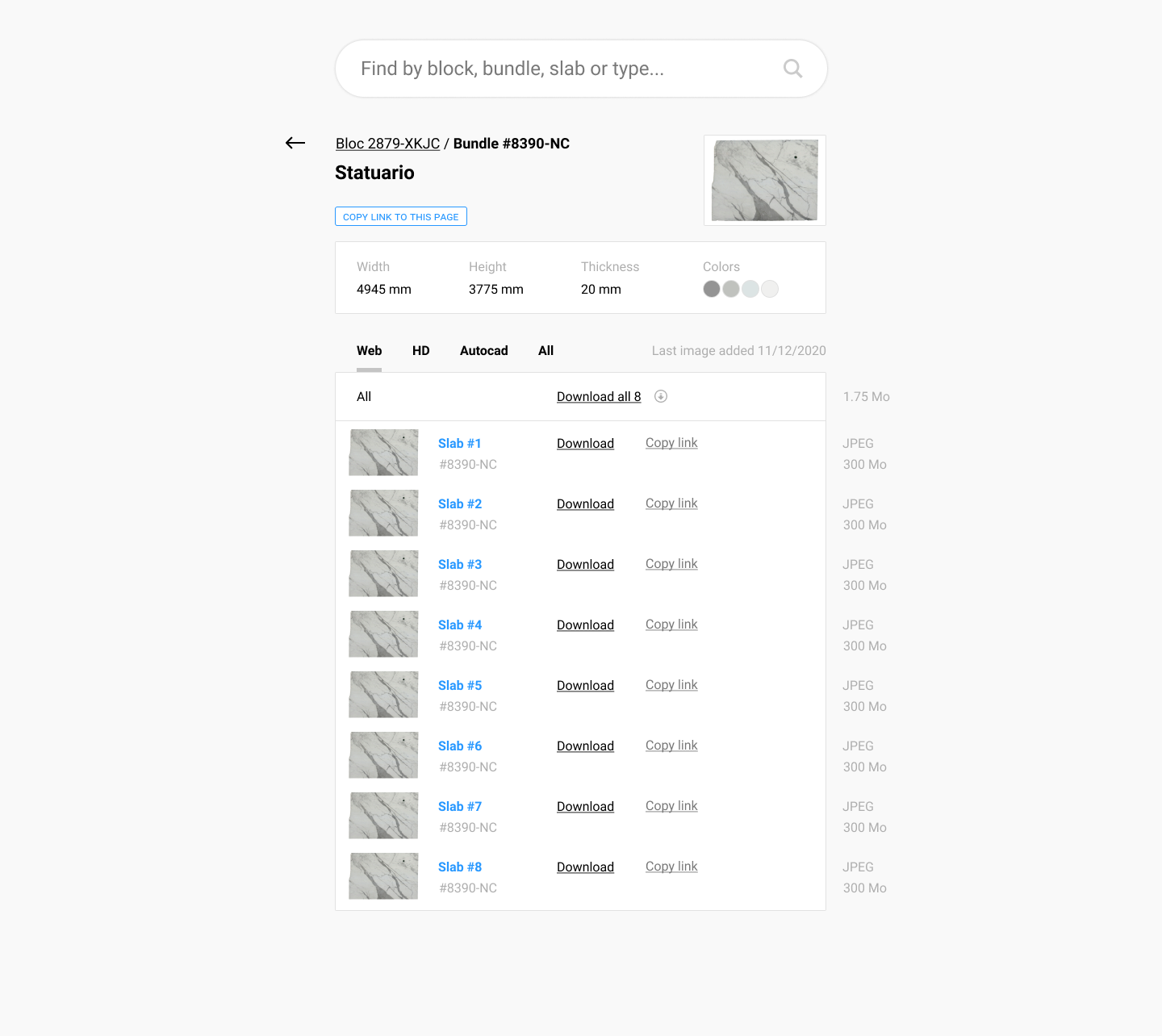
Chunk seller tool: a lot of eight Statuario slabs with their dimensions and a shareable link per slab
The seller-side tool, built on the scanner exports. A lot with its real dimensions, a link to share on WhatsApp for each slab, and a QR code sticker to attach photos taken outside the scanner.
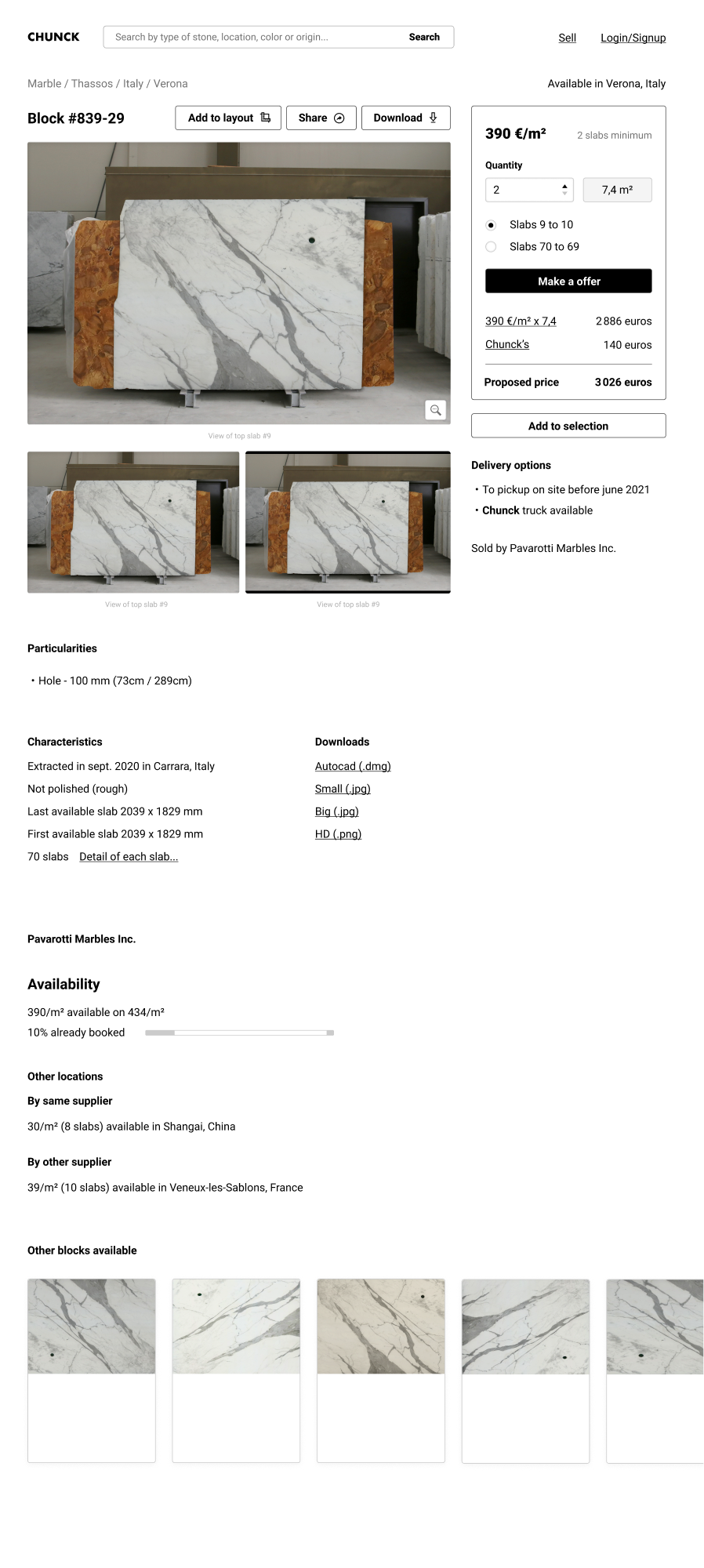
Chunk block page: photo of the slab, price per square metre, choice of slab range, Chunk fees, delivery options, downloads and availability from other suppliers
A block's page. A range of contiguous slabs, the share already reserved, the Autocad and HD downloads, and the revenue model put up for discussion: a 5% commission, storage at €7 a day.
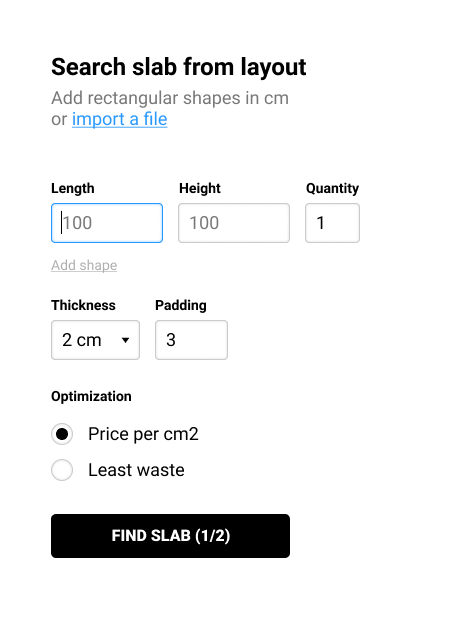
Retro-nesting screen: entering the shapes of a plan in centimetres, thickness, quantity and a choice between least waste and price per square centimetre
Retro-nesting turns the search around: start from the shapes of a plan to find the slabs that minimise waste or price.
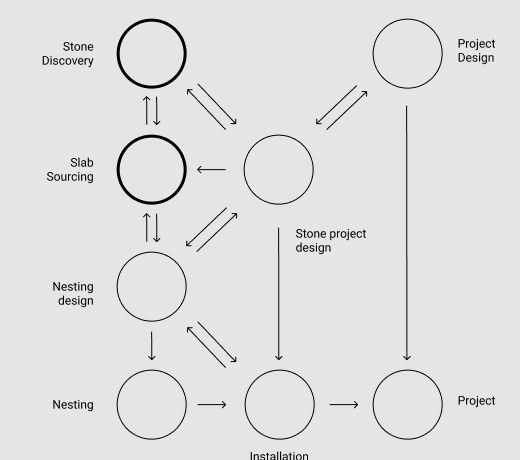
The journey of a stone project, from the board: discovering the stone, choosing the slab, layout, fitting, set against the design of the project
A project's journey, on the board. The two bold circles, discovering the stone and then choosing the slab, are the two moments of sale: the first is long and does not always end in a sale, the second is quick but fails when the slab has already gone.

The data model started from the exports of a scanner on the market, with their three measurements, outer, commercial, inner, and the outline of the slab. A side idea: the sticker placed on the slab already carries alignment marks and colour dots, so a plain photo with the sticker in frame can give the real dimensions and the shade, where a scanner costs twenty to thirty thousand euros.

The stop

A useful marketplace assumes that sellers share their stock and their prices. Their business rests in part on controlling that information.

The field had confirmed the problem and shown how hard the solution was. The stone trade rests on the relationship between a seller and their customer, and making stock and terms visible to others reduces the seller's control over that relationship. Tools for selling slabs already existed without having shifted those habits. I stopped the marketplace track, and the team moved on to the next project in the same industry, Guinet-Derriaz. What the exploration established is not that a stone marketplace is impossible, but that ours depended on a change in commercial behaviour that nothing allowed us to take for granted.